Choosing a career has never been easy. Today, it can feel even more confusing. Every college, training institute, and online platform promises exciting opportunities, successful graduates, and impressive placements. Social media adds to the noise by showcasing dream jobs and overnight success stories. It's easy to believe that everyone else has already figured things out.
An OECD report shows that's far from the truth. Nearly 40% of 15-year-old students are still unclear about their career expectations. Only about one-third have attended a job fair or completed an internship, while more than one in five have unrealistic job aspirations.
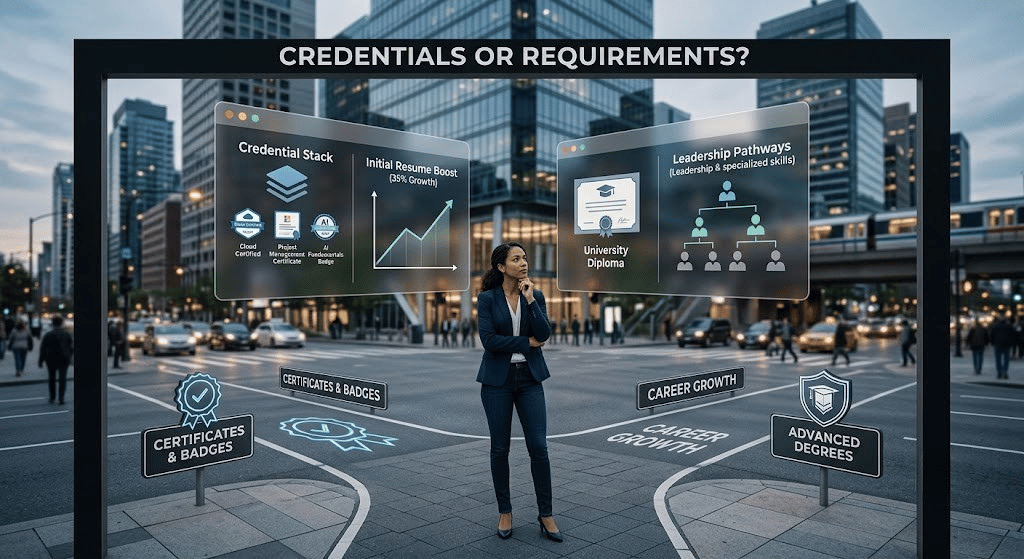
Imagine being in the middle of an ocean. When you're desperate to reach land, the first shore you see feels like the right one. Marketing understands this. It offers certainty when you're looking for direction. But not every shore can help you survive. The same is true when choosing a career. The right decision isn't about reaching the first option. It's about reaching the right one.
Don't Let Marketing Choose Your Future
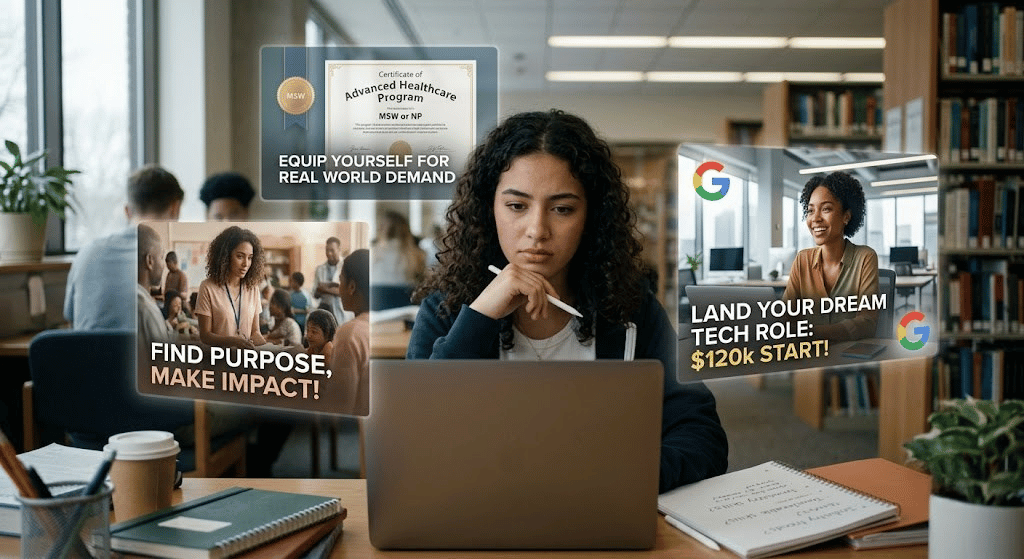
Educational institutions know exactly what catches people's attention. They showcase impressive campuses, glowing testimonials, successful alumni, and graduates who landed jobs at well-known companies.
These stories may be genuine, but they represent the best-case scenarios rather than the average student experience. A polished advertisement can spark your interest, but it shouldn't make the decision for you.
Before enrolling in any program, take a step back and ask questions that marketing materials often leave unanswered:
- Does the curriculum reflect current industry needs?
- Will I gain meaningful practical experience?
- Does the institution help with internships or placements?
- What are recent graduates doing a few years after completing the program?
- How often is the curriculum updated to match industry changes?
The answers to these questions will tell you far more about your future than any promotional campaign ever can.
Don't Mistake Popular Careers for Secure Careers
Technology continues to dominate career conversations. Many institutions proudly advertise graduates who joined companies such as Google, Microsoft, or McKinsey. It's easy to assume that following the same path guarantees long-term success.
The reality is more complicated. According to Crunchbase News, several of the companies that frequently appear in career advertisements also announced some of the largest workforce reductions in 2025. Intel reduced more than 27,000 roles. Microsoft cut over 15,000 jobs. Verizon eliminated 15,000 positions, while Amazon reduced more than 14,700.
The industry itself is changing rapidly. Researchers estimate that the half-life of technical skills has dropped from about ten years in the 1980s to roughly four years today. Moreover, this could soon fall below two.
That doesn't make technology a poor career choice. It simply means that choosing a career because it's trending is very different from choosing one because it fits your long-term goals.
Look Beyond Salary and Think About Impact
High salaries often dominate career advertisements, but they don't tell the whole story. More people today are looking for work that offers purpose alongside financial stability.
For instance, CNBC reports that social workers earn a median annual salary of $61,330, citing the U.S. Bureau of Labor Statistics. That figure may seem modest compared to many technology roles. Yet salary isn't the only factor shaping career decisions.
A Gallup survey found that nearly 80% of Gen Z respondents were interested in careers that help other people. Gallup researcher Katherine Senseman said many young people are searching for meaning and purpose. This comes at a time when loneliness and mental health challenges are becoming more common among Gen Z.
These careers rarely receive the same marketing attention, yet people continue to pursue them.
A transition interventionist may pursue a Master of Social Work to better support individuals through major life changes and improve long-term well-being. A practicing nurse may pursue an online FNP degree to become a holistic primary care provider, using its flexibility to keep upskilling while working.
These professionals aren't choosing these paths because they're trending. They're choosing careers that remain meaningful, adaptable, and in demand.
Choose Programs That Prepare You for the Real World
Finding the right career is only the first step. The next step is choosing a program that genuinely prepares you for the work you'll do every day. A strong curriculum matters, but practical experience often makes the biggest difference when it's time to enter the workforce. Look beyond the classroom. Explore whether the program includes internships, apprenticeships, clinical placements, simulations, industry projects, or mentorship opportunities.
Many modern programs now combine online learning with hands-on training, giving students the flexibility to study while building real-world skills. According to Texas Woman's University, some institutions also help students secure placements, making the transition into employment much smoother.
Every institution can promise career success. The better question is how it equips students with the skills, confidence, and experience employers expect. Those answers provide a far clearer picture than glossy brochures or success stories ever can.
FAQs
Why is Gen Z struggling to get jobs?
Gen Z faces a challenging job market because competition has increased while employer expectations continue to evolve. Many entry-level roles now require practical experience alongside academic qualifications. Developing in-demand skills, gaining hands-on experience, and building professional networks can improve long-term career opportunities.
What should you do if you chose the wrong career path?
Realizing you've chosen the wrong career doesn't mean you've failed. Assess your transferable skills, research growing industries, and identify roles that better match your interests and strengths. Upskilling through relevant education or certifications can help you make a confident transition.
What jobs will AI not replace?
AI will continue changing many industries, but it is less likely to replace jobs that rely on empathy, creativity, critical thinking, and complex decision-making. Careers in healthcare, education, counseling, and skilled trades still require strong human involvement. Learning to work alongside AI will become a valuable career advantage.
Career Trends at a Glance
| Insight / Metric | Strategic Takeaway |
|---|---|
| 40% of teenagers are unsure about careers (OECD) |
Career uncertainty is common. |
| 15K–27K layoffs at major tech firms (Crunchbase) |
Big brands don't guarantee stability. |
| Technical skills become outdated in about 4 years | Lifelong learning is essential. |
| 80% of Gen Z want purpose-driven jobs (Gallup) |
Meaning influences career choices. |
The truth is, marketing will always highlight the brightest success stories. That's its purpose. But your career deserves more than a compelling advertisement or a trending industry.
The strongest career decisions come from looking beyond the brochure. Research where industries are heading instead of where they've been. Look for programs that combine flexibility with meaningful practical experience. Talk to graduates, understand employer expectations, and think about the kind of work you want to do every day.
The first shore you see may seem inviting when you're unsure of your direction. However, taking time to find the right one turns a career choice into a lasting investment in your future.